The Tang Xianzu Memorial Hall in Fuzhou is a comprehensive cultural venue built to commemorate Tang Xianzu, one of the world’s hundred great cultural figures and a master of Ming‑dynasty drama in China. It is also one of Jiangxi Province’s ten major memorial halls dedicated to historical luminaries.


Appreciation of a Fine Work | When Shakespeare Met Tang Xianzu
Two theatrical giants of the same era
In 2016, it marked the 400th anniversary of the deaths of William Shakespeare, the master of English Renaissance drama, and Tang Xianzu, the renowned dramatist of China’s Ming Dynasty. From UNESCO to the hometowns of both Shakespeare and Tang Xianzu, numerous commemorative events were held to honor these two literary giants of world stature.
Sixteenth-century England and the Ming Dynasty of China; Shakespeare and Tang Xianzu—situated in the East and the West, separated by vast distances and unknown to one another—nevertheless shared so many striking similarities. To such an extent that, in later years, many scholars of world literature have undertaken comparative studies of their works. Were all these parallels merely coincidental?
Shakespeare and Tang Xianzu—one lived by drama, the other by the imperial examination system. What distinct “artistic lives” did these two theatrical giants lead, and what divergent life stories did they weave?
Theatrical Twin Stars
In 16th-century England, the British “empire on which the sun never sets” was steadily rising. Capitalism began to take root, the English economy grew increasingly robust, and, coupled with the burgeoning Renaissance, these developments laid the groundwork for a flourishing cultural renaissance—culminating in the vibrant growth of English drama.
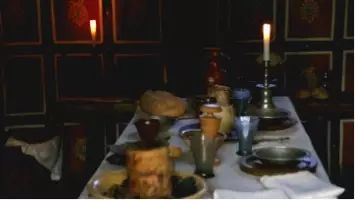
Shakespeare's Birthplace
William Shakespeare was born into a prosperous middle-class family in Stratford-upon-Avon, Warwickshire, in central England. At the age of seven, he was sent to a local grammar school, where he studied for six years and acquired the fundamental skills of writing as well as a substantial body of knowledge.
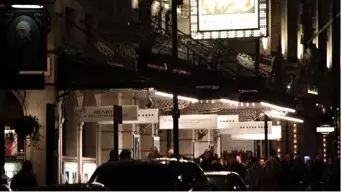
The Globe Theatre where Shakespeare once worked
Even as a boy, Shakespeare displayed an extraordinary literary talent. According to legend, he once went poaching on the estate of Thomas Lucy, a wealthy landowner and local magistrate, only to be caught by Lucy’s steward and beaten as punishment. In retaliation, he composed a satirical doggerel mocking the rich landowner. The poem soon spread throughout the countryside, and wherever Thomas made his rounds, people would taunt him with it. Fuming with anger, Sir Thomas resolved to punish Shakespeare, forcing him to leave his hometown of Stratford and seek refuge in London.
At that time, London was experiencing a golden age in which drama was rapidly gaining popularity. In the city, Shakespeare worked successively as a stablehand and a stagehand at theaters; eventually, he joined a troupe, where he served as an actor, director, and playwright, and ultimately became a theater shareholder—becoming a leading figure in the burgeoning theatrical movement and thriving in the world of drama.
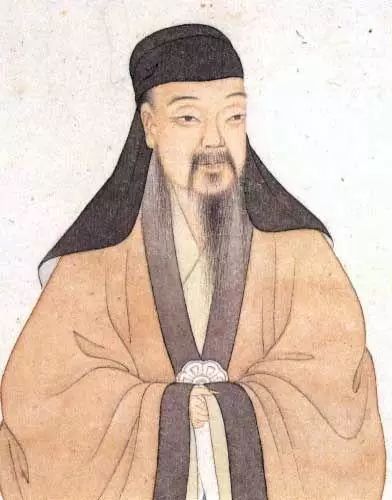
Tang Xianzu
Tang Xianzu, fourteen years older than Shakespeare, was born into a scholarly family and enjoyed comfortable circumstances from an early age. Endowed with exceptional talent, he displayed remarkable literary prowess even as a child. At the age of five, he entered his family’s private school; by twelve he could compose poetry, and at twenty-one he passed the provincial examination to become a juren. With such outstanding abilities, Tang might have achieved great success in officialdom; yet history seemed to play a cruel joke on this man of immense learning.
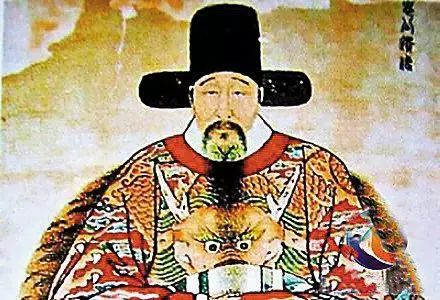
Zhang Juzheng
According to legend, during the imperial examinations of the fifth and eighth years of the Wanli reign, the chief grand secretary Zhang Juzheng sought to have his sons pass as jinshi. To shield himself from public scrutiny, he also tried to enlist a few truly talented and accomplished scholars as mere figureheads. Having learned that the most renowned candidates in the realm were none other than Tang Xianzu, Shen Maoxue, and others, he dispatched his own uncle to curry their favor, promising that, should they agree to collaborate with the chancellor, Tang Xianzu and the rest would be placed among the top ranks. With the chancellor’s formidable authority and the lure of honors coveted by many, Shen Maoxue and the others sold their integrity and indeed secured high rankings; but Tang Xianzu remained steadfastly upright, unmoved by such enticements. Though he did not oppose Zhang Juzheng’s political reforms, as an upright scholar he abhorred this corrupt atmosphere and thus resolutely declined both invitations. “I dare not consort with a woman who has already lost her virtue,” he declared. The outcome was predictable: Tang Xianzu failed to pass the examinations. Moreover, throughout Zhang Juzheng’s tenure, he remained perpetually unsuccessful. Yet precisely because of this, Tang Xianzu earned the admiration of people across the land for his noble character and unyielding integrity.
The noble person seeks harmony without uniformity.
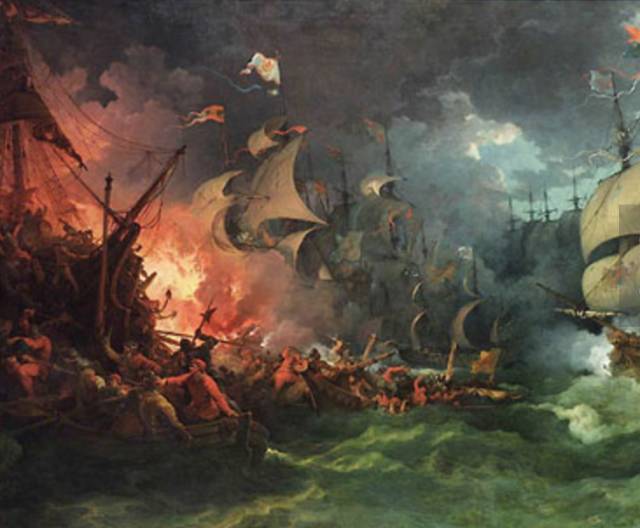
The 1588 English-Spanish Armada War
What impact did the great naval battle of the 16th century, in which Queen Elizabeth I of England led Britain against Spain in 1588, have on Shakespeare?
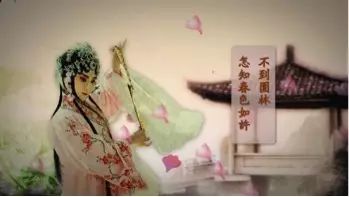
Kunqu Opera “The Peony Pavilion”
In Tang Xianzu’s “The Peony Pavilion,” why was a young lady of noble birth, like Du Liniang, forbidden even to set foot in her own garden?
Shakespeare and Tang Xianzu—what kind of profound social and historical upheavals and transformations did each find themselves in, giving rise to two such world‑class masters of drama? In the Chinese Analects, there is a saying: “The noble person seeks harmony without uniformity.” Where, then, lies the “harmony” of these two titans of Eastern and Western dramatic literature, and where, conversely, do their differences reside?
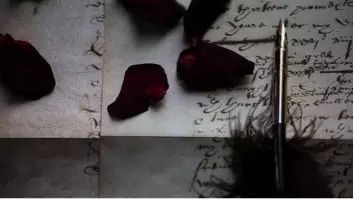
In 16th-century England, following the emergence of nascent capitalism, commercial awareness was strong, and theatrical works could serve as valuable cultural commodities, enabling Shakespeare to make a living through playwriting.
By contrast, in China at the time, playwrights and actors could only regard writing and performing as a mere pastime or hobby; Tang Xianzu was unable to earn a living from his plays. Yet why did this not prevent him from becoming a world‑class dramatist?
Those Things About Sha Tang
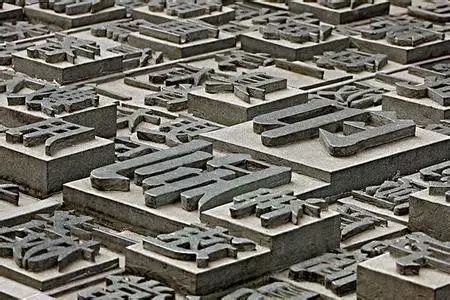
Movable type printing
In the mid-11th century, following the invention of movable type printing during China’s Northern Song dynasty, this technology spread westward along the Silk Road. Consequently, some scholars argue that the relative underdevelopment of printing practices resulted in a lack of well‑organized historical records for many of Shakespeare’s real‑world historical sources, leaving numerous historical mysteries surrounding his life still unresolved. So what about Tang Xianzu?
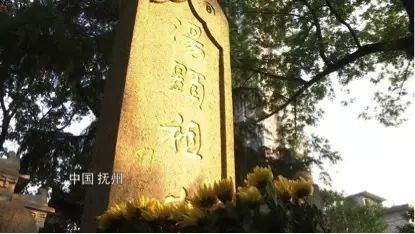
Why did Tang Xianzu, born into a distinguished family and renowned for his talent and learning, experience such an uneven career?
On the contrary, why did Shakespeare, who came from humble origins, thrive so effortlessly in London’s literary and aristocratic circles as well as at court?
Shakespeare and Tang Xianzu—one spent the better part of his life devoted to writing and performing plays, while the other centered his existence on taking the imperial examinations and holding official posts. What distinct yet equally compelling life stories did these two towering figures of drama craft, each shaped by their unique paths?
Our Time Together
Romeo and Juliet
Shakespeare and Tang Xianzu composed “paired masterpieces” that rank among humanity’s greatest tragic love stories: Shakespeare’s Romeo and Juliet in the West, and Tang Xianzu’s The Peony Pavilion in the East.
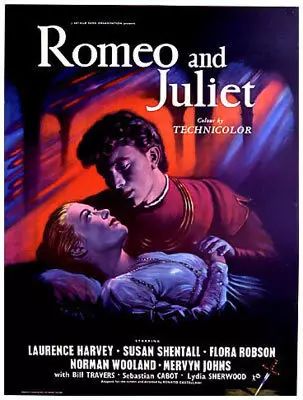
Romeo and Juliet
Shakespeare and Tang Xianzu composed “paired masterpieces” that rank among humanity’s greatest tragic love stories: Shakespeare’s Romeo and Juliet in the West, and Tang Xianzu’s The Peony Pavilion in the East.
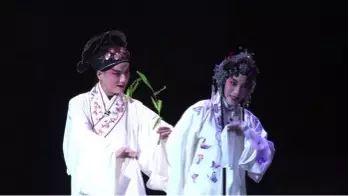
The Peony Pavilion
Why is it that, among world‑class dramatic works, a single play by Shakespeare has been adapted into more than fifty films and reimagined across numerous other art forms, while Tang Xianzu’s masterpiece, The Peony Pavilion, has not enjoyed such widespread acclaim?
What kind of “love‑filled moment” do these two theatrical masters conjure, through the pairs of Romeo and Juliet, and Du Liniang and Liu Mengmei—two sets of “brave mandarin ducks” from East and West?
A Future Encounter
Morning flights and evening rolls, clouds and rosy hues in the emerald pavilion; rain threads and gusts of wind, misty waves and painted boats—how lightly the brocade screen’s dweller esteems this fleeting springtime!
Then, for you, it is like a blossoming beauty and fleeting years; it is the idle girl who searches everywhere, pining in her secluded boudoir.
– The Peony Pavilion
Such richly ornate and splendid lines are abundant throughout “The Peony Pavilion,” permeating every page. Tang Xianzu’s poetic and literary foundation is profoundly deep, a quality that finds full expression in the language of his dramas.
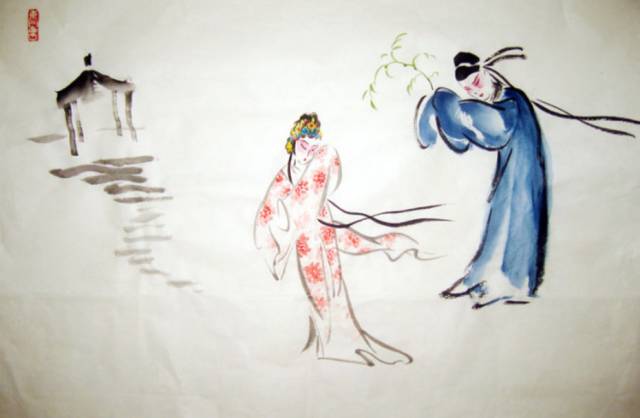
The Peony Pavilion
In China, Tang Xianzu is often hailed as the Shakespeare of the East, while some regard Shakespeare as the Tang Xianzu of the West. Yet why does Tang Xianzu’s dramatic literature fail to match Shakespeare’s in terms of both the depth and breadth of its dissemination?
Tang Xianzu and Shakespeare stand as iconic figures of Eastern opera and Western drama, respectively; the similarities and differences between these two cultural traditions have each given rise to its own splendor. Four centuries later, as we once again contemplate the aesthetic treasures that these two artistic masters bequeathed to us—Eastern opera and Western drama—we remain profoundly moved. Moreover, the tumultuous trajectories of their lives deepen our understanding of the humanistic spirit that permeates their works. As times change and cultural exchanges grow ever more frequent and seamless, Shakespeare and Tang Xianzu, these twin stars of the theatrical world, will shine ever more brilliantly in the firmament of human civilization.
-END-
Editor: Deng Chao | Source: Phoenix Great Vision, Phoenix TV
Submissions are welcome: 363036353@qq.com
National Level-3 Museum
Jiangxi Province Patriotic Education Base
Jiangxi Province Primary and Secondary School Research-and-Practice Education Base
China Overseas Chinese International Cultural Exchange Base
On-site Teaching Site of the Jinggangshan Cadre Academy of China
Chinese Qu Culture Education Base


Copyright © Tang Xianzu Memorial Hall of Fuzhou City (Fuzhou Tang Xianzu Culture and Art Center) Technical Support:China Enterprise Dynamics-Nanchangvertical strokeSEO
